
In industrial fluid control systems, butterfly valves are widely used in municipal water supply, wastewater treatment, petrochemical, power, and HVAC systems due to their compact structure, ease of operation, low flow resistance, and cost-effectiveness. Choosing the right butterfly valve not only ensures the safe and stable operation of the pipeline system but also effectively improves control accuracy and reduces long-term maintenance costs.
As a professional fluid control solutions provider, WEIZIDOM offers a full range of high-performance butterfly valves, covering various applications from general to demanding conditions. Our products comply with multiple standards including ANSI, JIS, DIN, GOST, and GB.
In this guide, we will systematically introduce the features, specifications, and applicable scenarios of various WEIZIDOM butterfly valves to help you make the most accurate selection for your project.
✅ Specifications
Size: 2”~40” (Maximum size may vary slightly depending on material)
Pressure Rating: PN10, PN16, CL150, JIS 5K/10K
💡 Key Features
Compact Structure: Wafer connection design, short valve body length, lightweight, installation without additional flanges or bolts, especially suitable for space-constrained piping systems.
Various Materials: Offers two main choices: stainless steel and ductile iron valve bodies. Stainless steel offers excellent corrosion resistance, suitable for seawater, chemical media, and corrosive environments; ductile iron balances strength and cost-effectiveness, ideal for municipal water treatment and general industrial applications.
Reliable Sealing: Various seat materials can be configured to ensure reliable sealing under different operating conditions depending on the media.
Flexible Operation: Can be configured with handles, turbines, pneumatic or electric actuators to meet manual and automated control needs.
Application Scenarios
Stainless Steel Wafer Butterfly Valve: Seawater desalination, chemical processes, pipelines transporting highly corrosive fluids.
Ductile Iron Wafer Butterfly Valve: Municipal water supply networks, air conditioning circulating water systems, fire protection systems, general industrial fluids.
🔥 Selection Tips
Wafer butterfly valves are one of the most versatile butterfly valve types. Key considerations during selection include:
Media Corrosivity: Stainless steel is preferred for corrosive media; ductile iron can be used for general water or oil applications to optimize costs.
Installation Space: Wafer designs have low requirements for pipe length, making them particularly suitable for retrofit projects or compact layouts.
Pipe Alignment: Ensure proper alignment between the pipe flange and valve during installation to avoid affecting sealing performance due to installation stress.
✅ Specifications
Size: 2”~56”
Pressure Rating: PN10, PN16, CL150
💡 Key Features
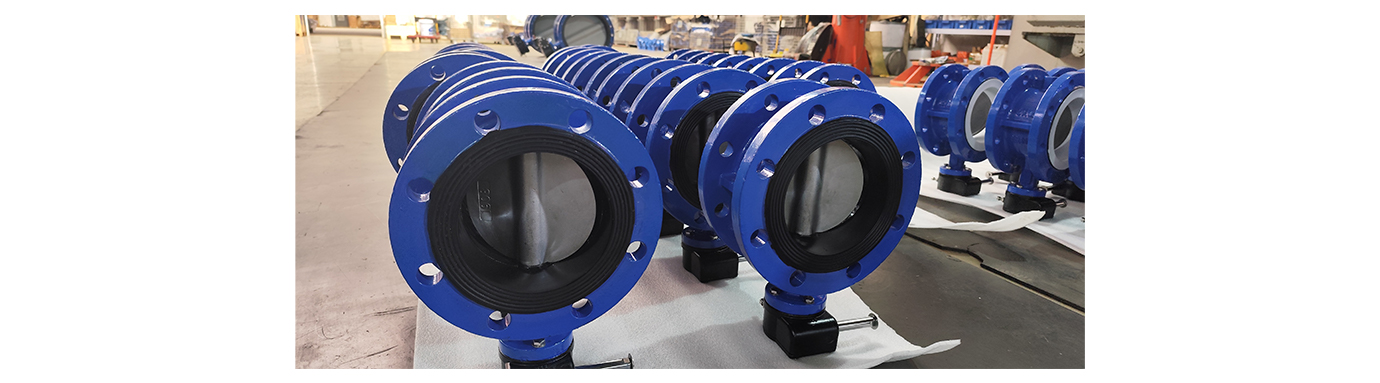
Reliable Connection: Utilizes flange connections with evenly distributed bolt holes, providing high connection strength, especially suitable for large-diameter or high-pressure applications. Double flange design: Easy to install at the beginning or end of a pipeline and facilitates disassembly and maintenance.
High pressure resistance: Capable of withstanding higher pressure fluctuations, ensuring long-term stable system operation.
Application scenarios: Large-scale water diversion projects, power plant circulating water systems, petrochemical trunk pipelines, and applications requiring high connection reliability.
✅ Specifications
Size: 2”~24”
Pressure rating: PN10/PN16, 150LB
💡 Key features
Bidirectional sealing: The lug design allows the valve to be used at the end of the pipeline without the need for additional flanges or short sections, achieving a leak-free seal in both directions.
Online maintenance: When installed in the middle of a pipeline, the downstream pipeline can be disassembled without affecting the valve’s position and seal, greatly facilitating system maintenance and sectional repairs.
Space optimization: Lighter and more flexible in installation compared to flanged valves.
Application scenarios: Equipment inlets and outlets requiring frequent maintenance, food and pharmaceutical production lines, fire hydrant branch lines, and sectional isolation points in large pipelines.
✅ Specifications
Size: DN100mm~DN1800mm
Pressure Rating: PN10, PN16, 150LB
💡 Key Features
High-Performance Design: Utilizes a double eccentric structure, allowing the valve seat and disc to quickly disengage upon opening, reducing friction and significantly extending valve life.
Zero Leakage: Achieves a tighter seal; some models meet the zero-leakage standard for metal hard seals.
High Temperature and High Pressure Resistance: Compared to center-line butterfly valves, double eccentric butterfly valves are more suitable for high-temperature, high-pressure, and particulate-containing media conditions.
Application Scenarios: Steam pipelines, high-temperature heat transfer oil systems, high-pressure water supply pipelines, and abrasive media (such as slurry) transportation systems.
✅ Specifications
Size: DN50mm~DN300mm
Pressure Rating: PN1/PN1.6MPa
💡 Key Features
Quick Installation: Employs a grooved connection method with clamps, eliminating the need for flange bolts or welding, greatly reducing installation time and construction costs.
Excellent seismic performance: The clamp connection has a certain degree of flexibility, effectively absorbing pipeline vibration and thermal expansion and contraction stress.
Easy maintenance: Simple disassembly for quick replacement or repair.
Application scenarios: Fire sprinkler systems, building water supply and drainage projects, mine pipelines, temporary water supply systems.
✅ Specifications
Size: DN80~DN3200
Pressure rating: PN10, PN16, CL150, JIS 5K/10K
💡 Key features:
Large-scale capability: Offers extra-large diameter butterfly valves of DN600 and above (maximum DN3200) to meet the needs of extra-large projects.
Hard-seal technology: Utilizes a metal hard-seal structure, capable of withstanding higher temperatures and erosion, suitable for steam or media containing solid particles.
Intelligent control: Can be integrated with an electric actuator to achieve remote automated control, flow regulation, and real-time status feedback.
Application Scenarios: Large-scale water conservancy projects, long-distance water pipelines, power plant cooling towers, and blast furnace blast systems in metallurgical industries.

When selecting the right butterfly valve for your project, please refer to the following core factors:
1. Media and Temperature: Is it water, oil, gas, or corrosive chemicals? Is the temperature normal, high, or low?
2. Recommendation: Use stainless steel butterfly valves for corrosive media; use double-eccentric or hard-seal butterfly valves for high-temperature or steam environments.
3. Pressure and Diameter: The working pressure (PN/Class) and nominal diameter (DN/inch) of the pipeline determine the valve’s pressure rating and size.
4. Recommendation: For large diameters (>DN300), prioritize flanged or double-eccentric structures; for small diameters and general applications, choose wafer-type valves.
5. Connection Method: Select the connection end type based on existing pipeline interfaces.
6. Recommendation: Choose grooved type for quick assembly and disassembly; choose lug type for pipeline ends or online maintenance; choose flanged type for high-pressure, large-diameter valves; choose wafer-type valves in compact spaces.
Recommendation: Choose electric/pneumatic for frequent operation or remote control; for large-diameter valves, even manually, turbine drive is recommended to reduce operating torque.
Sealing Requirements: Is zero leakage required? Can it withstand bidirectional pressure?
Recommendation: Choose soft seal for strict zero leakage requirements; choose hard seal for high-temperature resistance or media containing particles.
Q: What is the difference between a butterfly valve and a gate valve?
A: Butterfly valves are compact, open and close quickly, and have low flow resistance, making them suitable for frequent operation or large-diameter regulation; gate valves are typically used in applications requiring full open or full closed operation, unobstructed flow, and extremely low pressure loss.
Q: Which is better, a wafer-type or a lug-type butterfly valve?
A: It depends on the installation requirements. Wafer-type valves are more compact and cheaper, but generally cannot be used as the end of a pipeline; lug-type valves support bidirectional sealing and online maintenance, making them suitable for pipeline systems requiring sectional maintenance.
Q: How to choose between hard-seal and soft-seal butterfly valves?
A: Soft-seal (usually rubber or PTFE) valves achieve zero leakage and are suitable for normal temperature, clean media; hard-seal (metal-to-metal) valves can withstand high temperatures, high pressures, and media containing particles, but the sealing class is usually low leakage (e.g., Class VI).
Q: Can butterfly valves be used to regulate flow?
A: Yes. Butterfly valves, especially centerline butterfly valves and double eccentric butterfly valves, have good regulating performance at specific opening degrees (e.g., 30°-70°), and can achieve precise flow regulation when used with a positioner.
Q: How to ensure the compatibility of butterfly valves with pipelines?
A: The key is to confirm that the valve’s nominal pressure (PN/Class) is not lower than the system’s maximum working pressure, the valve body material is compatible with the media, the connection end type (wafer/flange/grooved) matches the pipeline, and the valve’s torque range is within the actuator’s output range.
For customized butterfly valve selection advice or product quotes for your project, please fill out the form on the right or contact us directly through the following methods.
Phone/WhatsApp: +86-13849184495
Email:eileen@wsdsolution.com
Our engineers will provide the most professional technical support based on your specific operating parameters.

